Querétaro, Mexico · Elementary category

Three friends.
300,000 liters.
One idea we couldn’t let go of.

We’re Ana Pau, Mika and Andy. We’re 10, and we’re headed to ExpoCiencias Nacional, Mexico’s national science fair for young people. This is our story, in our own words.

Read our story   How to help
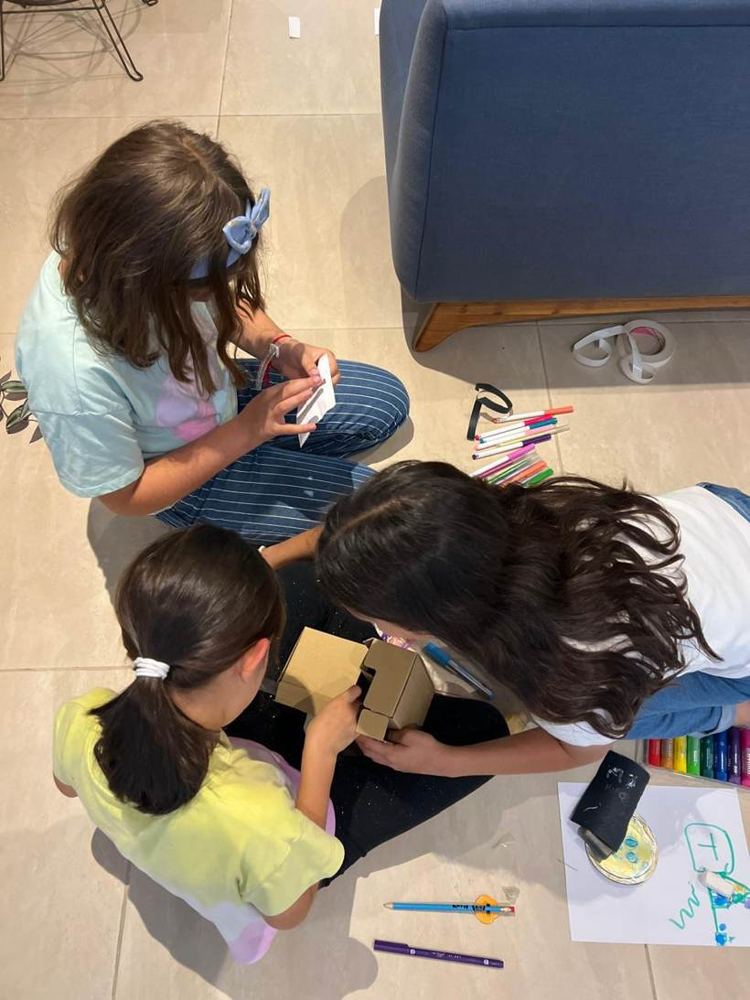
The three team members working on the floor with cardboard and markers
Where it all started: cardboard, markers and the living-room floor.
The team

Who we are

We’re three friends, all 10 years old. This didn’t start with a water tank. It started with a friendship.

Since 3rd grade

Best friends

Ana Pau and Andy have been best friends since third grade.

2025

Green Girls Squad

For our school science fair, they made a podcast together about taking care of nature.

🏅 Most Innovative Project · 2025 school fair
2026

Mika joins

Mika and Andy were already teammates on the soccer field. For the 2026 fair, Mika joined in, and the three of them became the Water Savers.

In our own words

Translated from Spanish.

Ana Pau

Why water matters to me
Water is important to me because you can’t live without it. Taking care of it is essential, and it’s something we all need to do every day.

Mika

The hardest part
The hardest part of my project was building the model, because we couldn’t decide on a design and we had to add lots of details.

Andy

What I liked learning most
What I liked learning most from my project is that when you decide to do something, you can do it. When you set a goal, you can reach it.
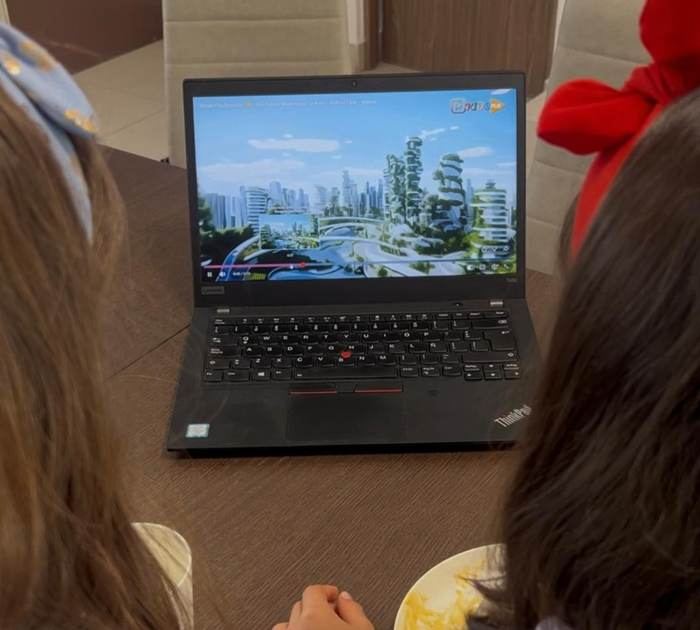
Two team members watching a video about smart cities on a laptop

First, we learned

Before building anything, we looked into how cities use technology to save water, and whether someone had already solved our problem. We found sensors for pipes and sensors for water tanks, but none that warned both the family and the local water utility. That piece was missing.

The moment that changed everything

The leak no one could see

Between December 2025 and January 2026, a hidden leak drained water from one of our homes. No puddle. No sound. We only found out when the water bill arrived.

That’s when we asked ourselves: how can a family lose so much water without noticing? We still have the bill.

300,000
liters on a single bill

That’s like pouring out 300,000 one-liter bottles.

Our idea

How would it work?

The full system isn’t built yet · we’ve already tested the key idea on a small scale

Follow the drop: from a leak in a rooftop water tank to the people who look after the whole city’s water.

  1. A leak you can’t see. Most homes here store water in a tank on the roof. When it leaks slowly, nobody notices.
  2. The sensors catch it. One sensor on the lid would measure the water level without touching it. Another, at the inlet, would measure how much water flows in.
  3. The family gets an alert. The app and its Water Coach assistant would send an alert, show how much water the home uses each day, and warn about water shut-offs.
  4. The “AI Brain” learns. A program in the cloud would learn how each home normally uses water, so it can tell when something is off.
  5. The city sees where the leaks are. The water utility would only get data grouped by neighborhood, with no names or addresses. Installing it would be voluntary.
1
We put it to the test

Stairs vs. slide

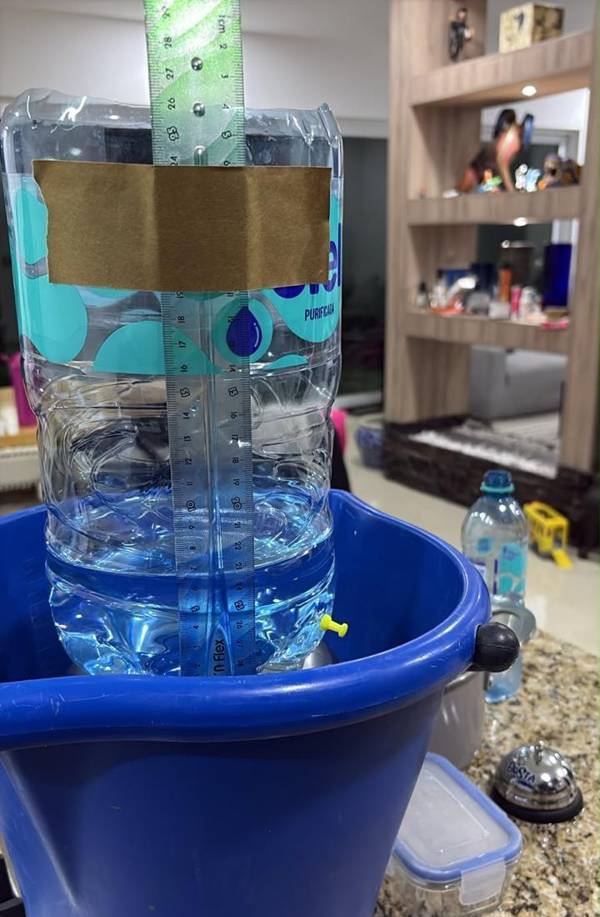
A large water jug with a ruler taped to the outside and a yellow pushpin plugging a small hole, sitting in a bucket
Our “water tank”: a big jug, a ruler, and a pushpin that plugs the leak.

We didn’t have a lab. We had big water jugs, a ruler, a pushpin and a notebook. We poked a tiny hole in the jug and plugged it with the pushpin. Pull the pin, and the leak starts.

First, we measured how much the level rises with each cup of water. Then we checked the level every 3 minutes for 30 minutes in three tests: normal use, a leak, and a leak plus normal use.

Normal use: stairs

When we take out a cup, the level drops at once, then stays still until the next cup.

Leak: slide

With a leak, the level is lower every time we measure. It never stops.

What we measured, minute by minute

Water level every 3 minutes for 30 minutes
Normal use (2 cups)LeakLeak + use

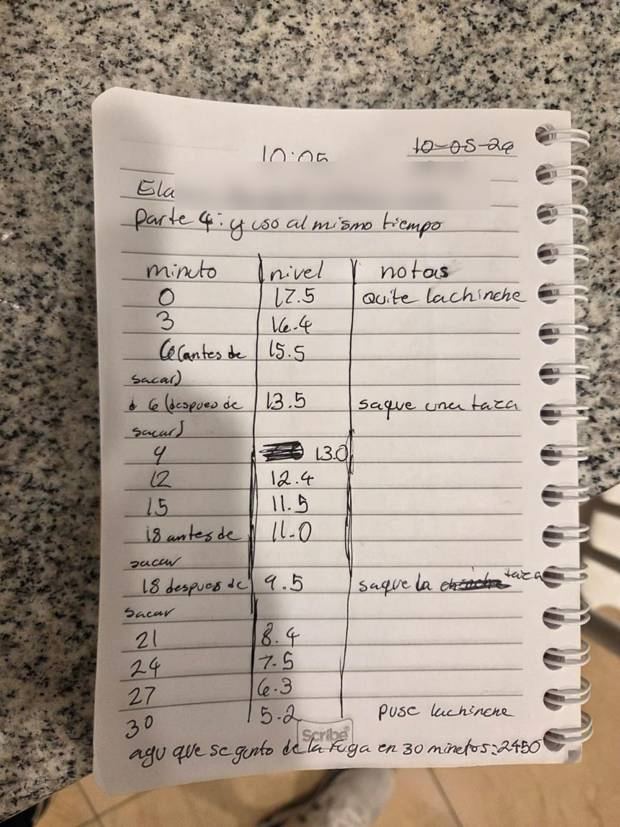
With normal use, the level holds still between cups: stairs. With a leak, it never stops dropping: slide. In 30 minutes, the leak lowered the level 8.9 cm in home 1 and 5.8 cm in home 2. Both cups together: about 2.5 cm. The leak you can barely notice wasted more water.

A page from an experiment logbook with columns for minute, level and notes
One of our logbooks: leak and normal use at the same time.

We asked families

We surveyed 159 households, 105 of them in Querétaro. It doesn’t speak for every family, but here’s what the ones in Querétaro told us:

73%don’t know how much water they use, or just guess
90%want an alert when something is wrong
89%would share their data if it doesn’t include their name
The journey

One fair at a time

From our school science fair to a national competition, in a single year.

We went and asked

We visited the people who manage our water

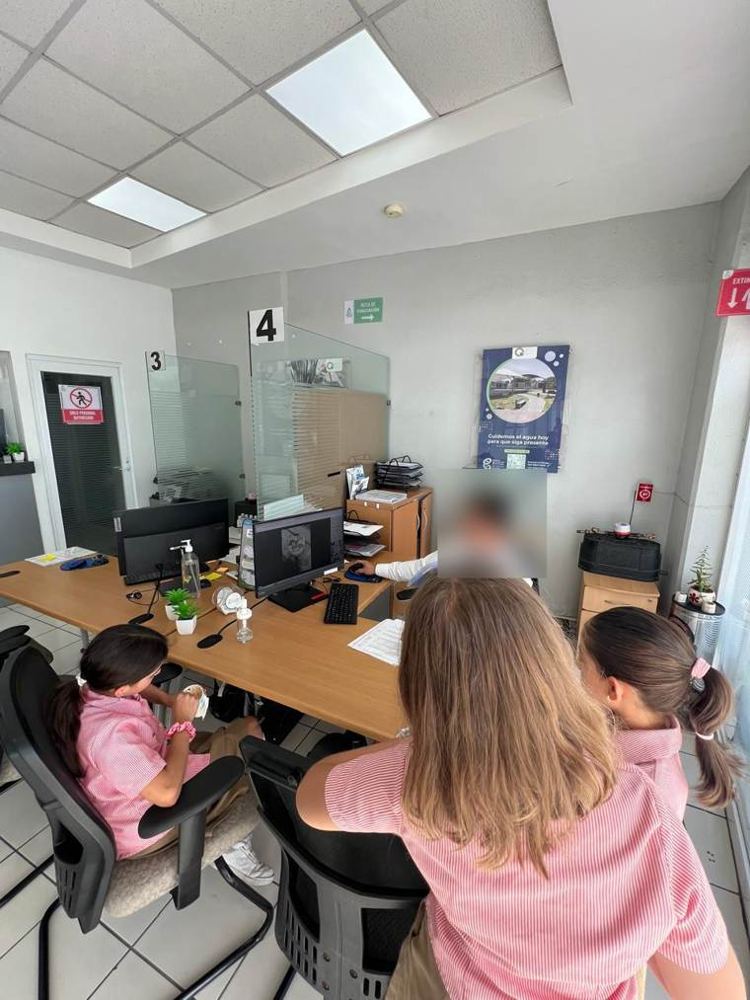
On April 13, 2026, we went to the offices of AQUAA La Pradera, our local water utility, to present our idea and ask how they measure water use. We learned that meters are read by hand, house by house, once a month. That’s thirty days when a leak can keep running without anyone knowing.

The team at a customer service desk while a staff member shows them something on his screen
Staff member’s face blurred for privacy
1

School science fair

We won our school’s science fair. It was the first time we presented Water Saver to a panel of judges.

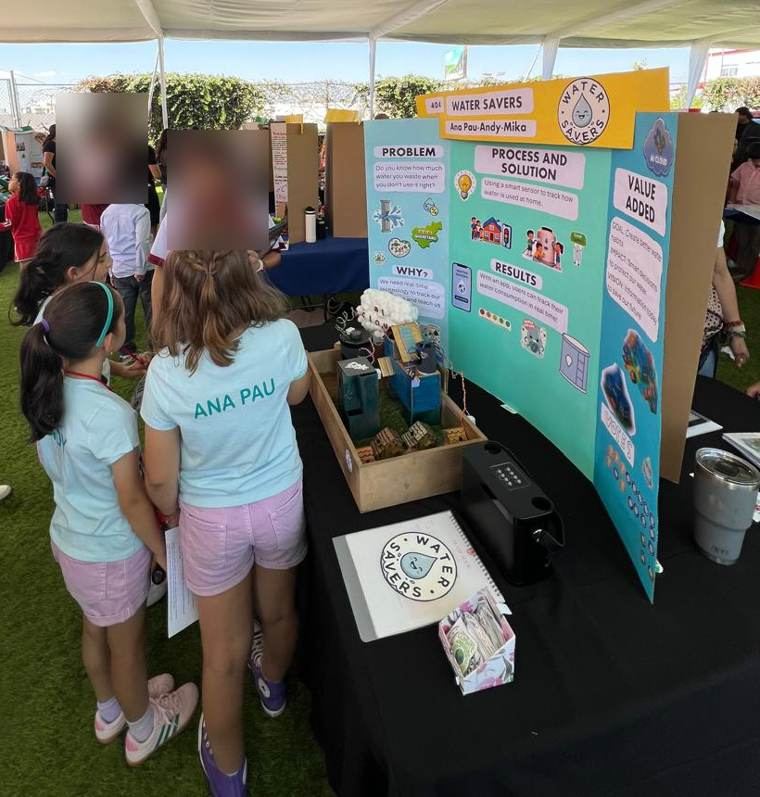
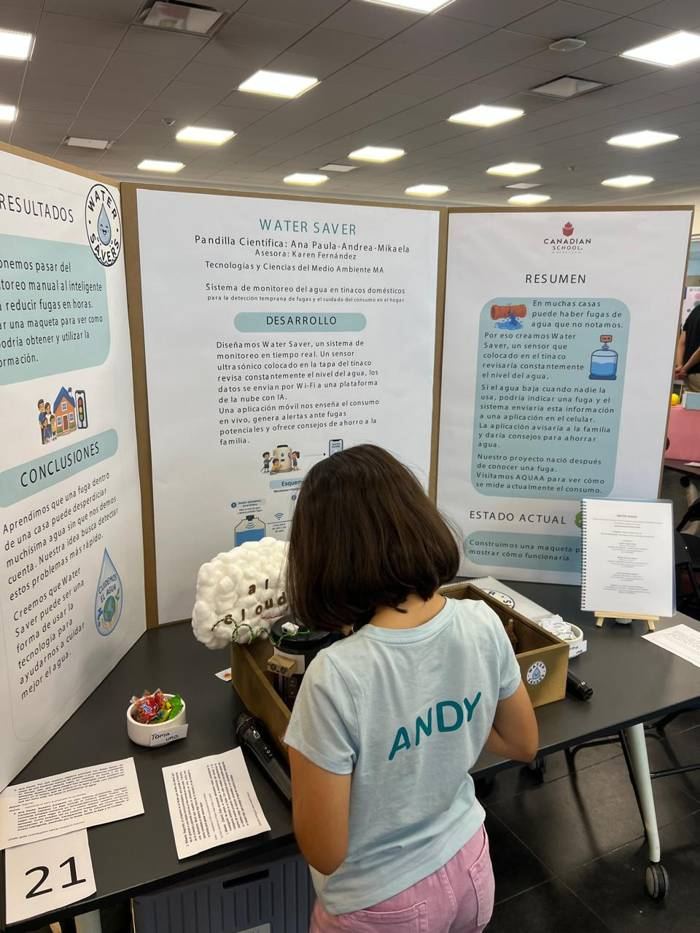
The team in front of their display board and model at the fair
2

ExpoCiencias Querétaro 2026

We competed against projects from across the state and earned our spot at the national fair.

A team member, seen from behind, in front of the display board and model
Being transparent

What we did, and who helped us

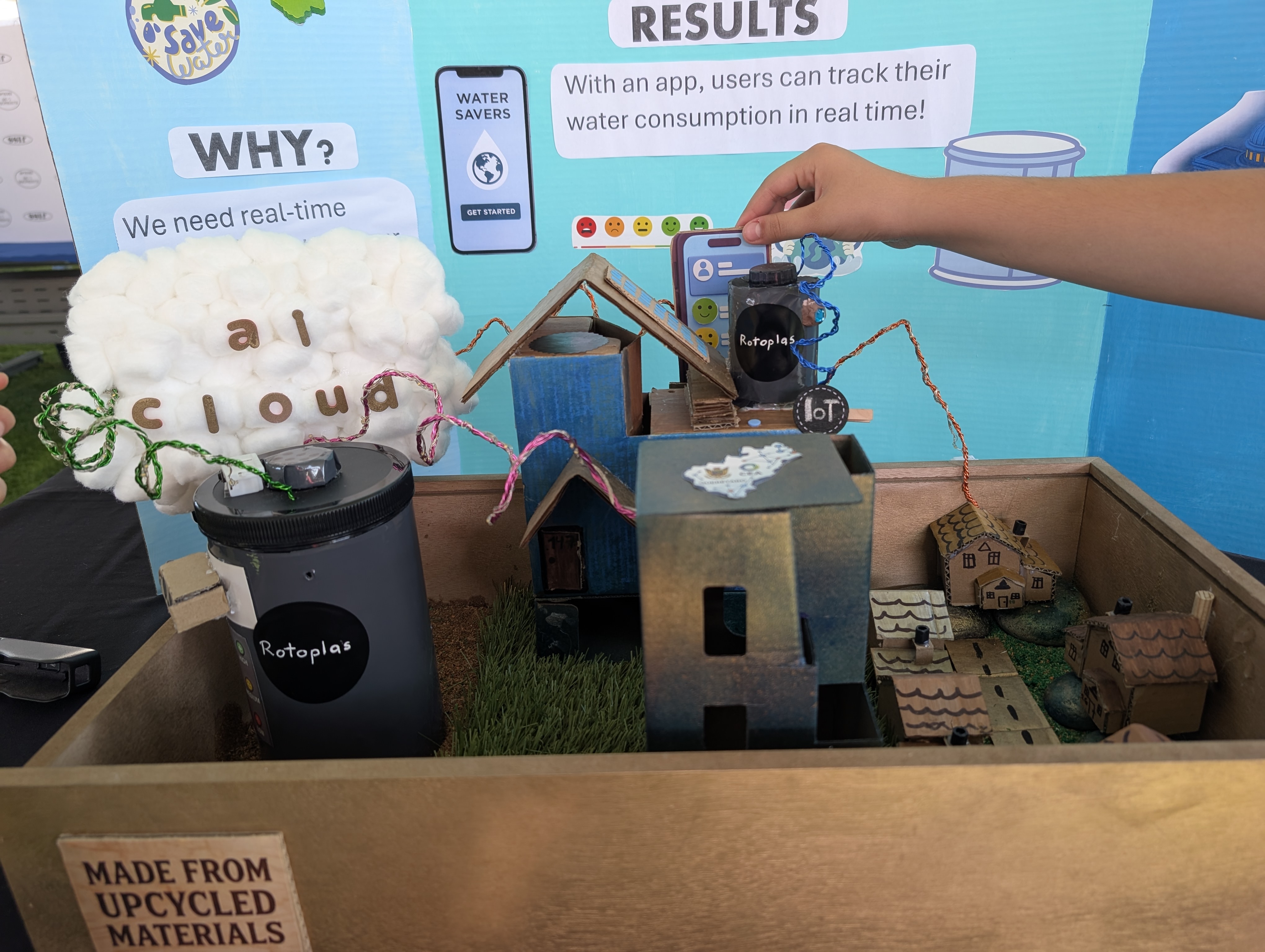
Finished model with water tanks, cardboard houses, a cotton-ball cloud and a cardboard phone, in front of the display board
The finished model: water tanks, houses, the cloud and the phone with the app. Made from upcycled materials.

“…we had to add lots of details.” — Mika

We did it ourselves

  • The research paper
  • The display board
  • The model
  • The presentation to the judges

Who helped us

  • Our families guided us and were with us every step of the way
  • Our faculty advisor coordinates the project and comes with us to the fairs
  • The families who answered our survey
Where we’re headed

What’s next

First we tested the idea. Now it’s time to build it.

Build the real sensorPut together our first level sensor and try it on a real water tank.
A controlled leakCreate a leak in a real tank and see whether the system can tell it apart from normal use.
A pilot with AQUAAInvite AQUAA La Pradera to try it with us in a few homes.
How to help

Be part of our story

Our families are covering the trip, the fair registration and our stay in Monterrey. What we still need is our booth: the display board, the printing, and the materials to show our project.

Estimated cost of the boothMX$5,000Every contribution gets us closer. You don’t have to cover it all.

Make a contribution

Any amount helps. Write to us and we’ll tell you how.

Give in kind

Printing for the display board, materials for the booth, or technical advice to build our first real sensor.

Write to us to help

If we raise more than we need, we’ll use it to build our first real sensor. After the national fair, we’ll post here how every peso was used.